
ICAE 2026 Workshops
Workshops provide pedagogical spaces for both formal and informal education and conversation and have become an important way we build, nurture, support, develop and encourage our community.
This year, in association with the Sofia Centre for Creative Research, ICAE2026 are holding a festival of creative pre conference online workshops from the 8th to 11th July, the cost of workshops: two day workshops £100 one day workshops £50 per day. Please scroll down the page to learn more about the workshops and presenters.
- Workshop 1 (Two-day): Poetry and Research: From social science research to a life-giving practice, Saturday 11th & Sunday 12th July 10am – 2:30pm (BST) 5am (EDT) 6pm (JST) with Kitrina Douglas, David Carless, Chihiro Suzuki and Guests
- Workshop 2 Autoethnography & Ethics: Questions and consideration in the round Wednesday 8th July 2026 5pm-8pm (BST) 5am-8am (JST) 1pm-5pm (USA/Brazil) with Kitrina Douglas
- Workshop 3 Introduction to Autoethnography, Reflective Practice & Reflexivity (or, autoethnography for beginners) Thursday 9th July 10am – 2:30pm (BST) 5am (EDT) 6pm With David Carless, Kitrina Douglas and Guests
- Workshop 4 SafeGuarding: Strategies for self-protection and well-being during autoethnographic work, Friday 10th July 5pm-8pm (BST) 5am-8am (JST) 1pm-4pm (USA/Brazil). With Elyse Pineau, Southern Illinois University, USA & Kitrina Douglas
- Workshop 5 Haunting, Autoethnography & Critical Family Histories, Saturday 11th July with Esther Fitzpatrick, University of Auckland, New Zealand 7-9:30pm BST (BST) 6am-9:30 in Auckland, New Zealand
- To register contact our administrator Nadia at admin2@boomerang-project.org.uk
Autoethnography & Ethics Questions and consideration in the round with Ana Cimbleris-Alkmim Universidade Federal de Minas Gerais, Brazil, and Kitrina Douglas, timings to be confirmed estimates to be 5pm-8pm (BST) 5am-8am (JST) 1pm-5pm (USA/Brazil). Over the past twenty years those who practice autoethnography will have witnessed a change in how we approach ethics. No longer is the conversation simply about whose story is being shared, and who might be implicated by the telling. Questions and concerns range from how we maintain the anonymity of others in our stories – to considering the potential harm we do to ourselves sharing one’s life and these are mitigated alongside harms experienced by not telling, accountability, care, procedural ethics, situational ethics, relational ethics (to name but a few).Our aim in this workshop is to briefly outline the main issues for ethics committees, and explore how researchers might negotiate these. It is not our intention to generate foundational guidelines as some others have done, but rather recognise the unique challenges that arise in specific research and consider different ways we might negotiate these.
The workshop follows a template we developed last year which is organic and provides an opportunity for delegates, researchers and students to bring their ethical challenges, questions, or concerns and share these in a supportive space in order to help develop strategies and ideas to negotiate them.
Thursday 9th July: Introduction to Autoethnography, reflective practice, reflexivity and putting the researcher in the frame 10am – 2:30pm (BST) 5am (EDT) 6pm
Many researchers don’t start off with the intention of writing autoethnography, its more they feel honour bound to include and position their role in the research, or their experiences that may influence how a research project unfolds and then, search for methodologies which support such reflective and reflexive awareness. For others, their curiosity leads to questions about how to start an autoethnography? Is there a wright and wrong was? Some researchers wonder if it is possible to carry out collaborative autoethnography and what about including participants in commissioned research?

Added to the above often researchers wonder about how to publish? What is the difference between memoir, autobiography and autoethnography?
These are just some of the issues that make this work complex.
During this workshop we provide guidance, mentoring, inspirational case studies and support to help delegates find their voice in a convincing way that is backed up by a power literature base. The workshops will be of interest to those who want to write more reflexively, to not stand behind a veil of neutrality and or who new to autoethnography and struggling to justify it within a department or discipline where it is less well developed.
Friday 10th July: Staying safe and protecting your mental health (while negotiating emotional traumas and vulnerabilities, 5pm-8pm (BST) 5am-8am (JST) 1pm-5pm (USA/Brazil).
To register please complete the registration form available by navigating the headings above, by selecting the following link to download a registration form https://boomerang-project.org.uk/registration/ or visiting our sister web site the Sofia Centre for Creative Research or for questions and additional information please contact our administrator Nadia at admin2@boomerang-project.org.uk
Creating poetry in research: From social science research to a life giving practice
Saturday 11th & Sunday 12th July 2026
10am – 2:30pm (BST) 5am (EDT) 6pm (JST)
Cecil Day-Lewis, Poet Laureate of the United Kingdom from 1968-1972, believed that poetry can create a bridge from what we know over to the unknown, very much like an explorer going on an voyage. Such expeditions, he suggested, bring to light those dimensions of life and experience that science doesn’t represent or understand well, such as emotions, relationships, our feelings, imagination and somatic pre linguistic knowing. Likewise, US Poet Laureate Billy Collins, believed poetry chronicles and accounts for the human heart, again, something difficult to document and understand through traditional social science methods.
As researchers, many of us take seriously the problem inherent in when the limits of science influence what we can know or measure and therefore inevitably important “stuff” will be omitted from research. In part, some things are lost to us because we don’t know how see, hear or to include it, and this in part relates to the methods we use. As Elliot Eisner reminds us “form and content are inseparable” we know by the form we use, and we are thus limited by the form we use.
These facts, or challenges, form the backdrop to this workshop. If, the form/methods we use to conduct research limits what we can know – are we not duty bound to adopt alternative approaches to add, compliment and expand what we have learned during a research project in order to gain a fuller, more nuanced and more comprehensive understanding?
Poetry provides one alternative form of knowing that Day-Lewis, Collins and many, many before them, believed provide a form to understand and communicate what can be difficult or impossible via other means, and thus provides a compelling rationale to explore the benefits of poetry (in all is forms) in our research.
This workshop supports delegates to explore:
Day one:
- Advantages of poetry in your research and especially outside the arts & humanities
- Illustrations of how poetry is being used and developed by researchers in Health, Medicine, Nursing, Sport and Exercise Science, Pharmacology, Psychology and Sociology (to name a few) with examples from commissioned projects and published research
- To experiment with different styles of poetry, and different approaches to creating poetry
- Explore different traditions [from Haiku to Sonnets]
- Engage in tasks that develop creativity, experimentation, deep emotional engagement and develop poetic writing skills
Day two
- An opportunity to create poetry from interview transcripts, stories, autoethnography, and field work, messy texts, and to create different types of poetry (performance poetry, collaborative poetry)
- Examine and explore how to use poetry for data collection and co-created research designs
- Participate in tasks that develop creativity, play and develop writing and communication skills
For information about facilitators please scroll down the page. To register https://boomerang-project.org.uk/registration/ or contact our administrator Nadia at admin2@boomerang-project.org.uk Apologies, this workshops was originally scheduled for the 6th & 7th of July but due to unforeseen scheduling issues we have been forced to move to the weekend.
Saturday 11th July “Haunting, autoethnography and critical family histories” with Esther Fitzpatrick, University of Auckland, New Zealand 7pm-9:30 (BST) 6am-8:30 (Auckland, NZ)
I have a bag full of small stones. The bag is small too – about the size of an A5 paper, covered in scissor patterns, and has a zip. The stones and the bag are material artefacts of my family history, remnants of places I have been, following traces and speaking with ghosts. Re-membering-being-in-the-world as the wind rushes through my hair at the top of Rough Tor standing alongside-with the cairns of my ancestors, feeling the giant hard roughness of the stone, the place where the swallows gather, while gazing out to the Fowey River, meandering and carving its way to the ocean, carrying the ancient songs of the traders, crusaders, fisherman, tin miners, priests, farmers, weavers, mothers and fathers. I breathe. What does it mean to be a river. To belong unsettled. Fragments of story marking the tombstone or smudged birth record, an initial carved by the choir boy on a pillar in the church, or a coat of arms on the giant stone at the back of a family farm when coming home from war, a flood line on the river bank. We were-are here.
In this presentation-workshop I invite you to travel with me. To consider what it means to speak with our ghosts through the materiality of engagement – take our shoes off and place our feet into the swirling waters at the source of an ancestor river.
Facilitators
Creating poetry in research: From social science research to a life giving practice
Monday July 6th & Tuesday 7th July 2026
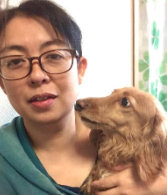


Chihiro Suzuki, (Osaka University, Japan) Like most young people in Japan Chihiro was introduced to Haiku at school where she was encouraged to listen to, and read Haiku in class. However, what she found most inspiring was watching and listening to how her grandmother created Haiku. Being Japanese, Chihiro provides a particular Japanese perspective on this craft, but she will also offer and discuss English Haiku, and differentiate between Japanese and western understandings.
David Carless, (University West Scotland),
“My transdisciplinary research seeks to generate new insights into contemporary challenges in health and society. I work from the indigenous philosophy that to understand a phenomenon we must understand it across all four aspects of our being: mind, body, emotion and spirit. This holistic way of knowing inspires students, informs professionals, opens new possibilities for action, extends cultural horizons and mobilises social change. I work towards this through research methodologies that support multisensory engagement, such as arts-based, autoethnographic and narrative approaches. The processes and products of this work incorporate collaborative or co-produced storytelling, filmmaking, music and performance that is engaging and accessible for diverse audiences.”
while David may be better known among auteothnographers for his songwriting and music videos, his arts based methodologies began over a quarter if century ago developing innovative ways to understand his data. He has since used poetry in data collection, in co-created and collaborative research, has created and published research poems from transcripts, and from field work. With a sensitivity for lyrical understanding (perhaps unusual for an academic in exercise and health sciences), David’s work often blends performance, poetry, visual imagery, storytelling and songs, “Matthew and Me” provides a flavour for this work https://www.youtube.com/watch?v=5R5w5RRxNOk&t=1s
See also http://www.youtube.com/@davidcarless1331
http://UWS https://research-portal.uws.ac.uk/en/persons/david-carless/
Kitrina Douglas, University of West London is an award-winning video/ethnographer, performer, storyteller, musician, and narrative scholar whose research spans the arts, humanities and social sciences. Broadly her research spans mental health, arts-based methods and public engagement. She has carried out commissioned research for a variety of organisation including Department of Health, Addiction Recovery Agency, Royal British Legion, Women’s Sports Foundation, UK Sport, local authority and NHS Primary Mental Health Care Trusts and publishes findings via films, videos, performance, songs, poetry, and stories as well as in peer reviewed academic journals and books. With David Carless she had pioneered the use of creative arts-based methodologies in health and exercise research and to this end has co-authored four books, 30 ethnodrama performances and over 50 films on YouTube. With David Carless she also developed the online qualitative research series “qualitative conversations”. Kitrina holds a Professorship in Narrative & Performative Research at the University of West London, is a board member of International Congress of Qualitative Inquiry, Director of the International Conference of Autoethnography, and serves on the advisory boards Podium Analytics and the National Anti-doping panel. Before entering academia Kitrina played professional sport and was one of the top golfers on the women’s European Tour for two decades winning 12 professional events and representing England, Great Britain and Europe. (https://en.wikipedia.org/wiki/Kitrina_Douglas.) She also worked as a commentator for the BBC radio five live, BBC sport online and Eurosport.
Djenane Ramalho-de-Oliveira, Universidade Federal de Minas Gerais, BrazilDjenane Ramalho-de-Oliveira, Universidade Federal de Minas Gerais, Brazil, I teach pharmacy and medical students about person-centred care. I conduct research about the patient’s illness and medication experience in an attempt to understand how those experiences might influence patients’ experiences and their health outcomes. I also teach qualitative methods and autoethnography to graduate students from the health care field. Link to Djenane’s Keynote at ICAE2025 https://www.youtube.com/watch?v=7fIEMj97Nu0&t=118s
Elyse Pineau, University of Southern Illinois. Among the many accolades Elyse has received for her teaching and scholarship, she was the 2024 ICAE Lifetime Contribution award https://www.youtube.com/watch?v=V0m9-Q5S-xY&t=19s
Esther Fitzpatrick, University of Auckland, New Zealand Esther is a Senior Lecturer in the Faculty of Arts and Education and Director of the Initial Teacher Education Programmes Early Childhood and Primary. She is also Director of the Narrative and Arts Research Special Interest Network. (https://www.auckland.ac.nz/en/arts/our-research/research-institutes-centres-groups/narrative-and-metaphor-special-interest-network.html). She is interested in issues of identity, bicultural practice and decolonising strategies (methods and pedagogy). Esther uses various critical innovative pedagogies, including writing as a method of inquiry, in her teaching and research. She has published on issues of racial-ethnic identity, Pākehā (white) identity, neoliberal impacts on academic identity, critical family history, critical autoethnography and arts-based methodologies. Her current research explores emerging identities in postcolonial societies, and ‘culturally responsive pedagogy’ in practice. Esther has published in Qualitative Inquiry, Cultural Studies – Critical Methodologies, Departures in Critical Qualitative Research, and Art Research International: A Transdisciplinary Journal. She has recently co-edited two books: Fitzpatrick, E. & Fitzpatrick, K. (Eds) (2020). Poetry, method and Education Research: Doing critical, decolonising and political inquiry. Routledge, Abingdon, Oxon: Routledge, and Farquhar, S. & Fitzpatrick, E. (Eds) (2019). Innovations in Narrative and Metaphor: Methodologies and Practices. Singapore: Springer.