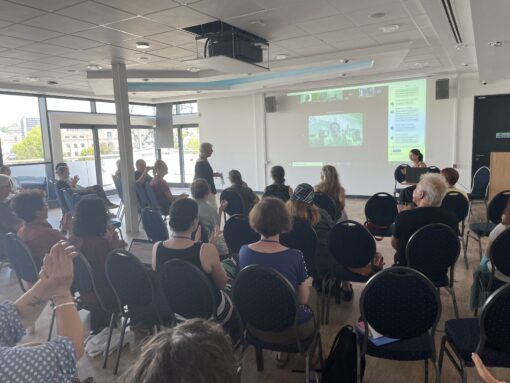
The International Conference of Autoethnography 2026 will take place on Monday 13th to Tuesday 14th of July 2026, please view or download the programme here, a fuller programme and abstracts will be available here nearer the conference and for those attending in person a printed copy will be in your welcome pack.
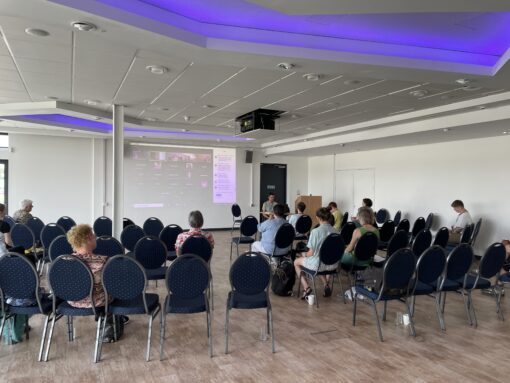
You can join the conference online (via Zoom) and/or in-person at The Engineer’s House, Clifton Village, Bristol, UK. If you have not done so already, and would like to attend the conference, please register by e mailing admin2@boomerang-project.org.uk. Additional information about the conference theme, venue, workshops, keynotes and invited panels can be found below.
ICAE2026 Conference Theme:
Connections
David Bohm wrote: “Our future depends on whether we feel like part of this whole or whether we feel we’re separate.” Although these words were published nearly 50 years ago, they are more pertinent than ever in a climate of fracturing global connections and relationships. ICAE2026 invites you to address connections in and through autoethnography. Connections between diverse peoples, species, places, times, cultures and identities. Connections across disciplinary boundaries, theoretical perspectives, philosophical positions, and genres of inquiry. Connections across belief systems and ways of being. ICAE2026 invites you to story, perform, theorise and reimagine myriad connections within the human and the more-than-human world.
Bohm, D. (1980). Wholeness and the implicate order. Routledge. (p. 28)

Information & What’s On
Pre Conference workshops
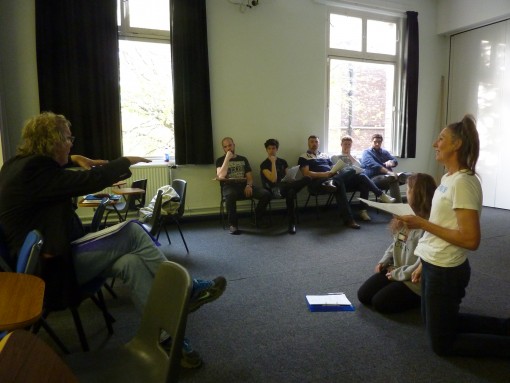
To register for one of our online workshops please complete the registration form or contact Nadia admin2@boomerang-project.org.uk
| Wednesday 8th July | Ethical Challenges in Autoethnography: Considerations in the Round 5pm-8pm (BST) 1pm-5pm (USA Brazil) |
| Thursday 9th July | Autoethnography for Beginners 2pm-5pm (BST) |
| Friday 10th July | Safeguarding in Autoethnography: Strategies and Practices for Wellbeing and Mental health 5pm-8pm |
| Saturday/ Sunday 11th & 12th July | Two day workshop Creating Poetry in Research: From social science research to a life giving practice 10am-2:30pm (BST) |
| Sat 11th | Haunting, autoethnography and critical family histories. 5pm-7:30pm (BST) 6am-8:30 (Auckland) |
Find additional information about the workshops here: https://boomerang-project.org.uk/workshops-2/
Keynotes:
Durell M. Callier and Dominique C. Hill their presentation abstract is below
Infinite Knots: On staying Connected & Weaving our We
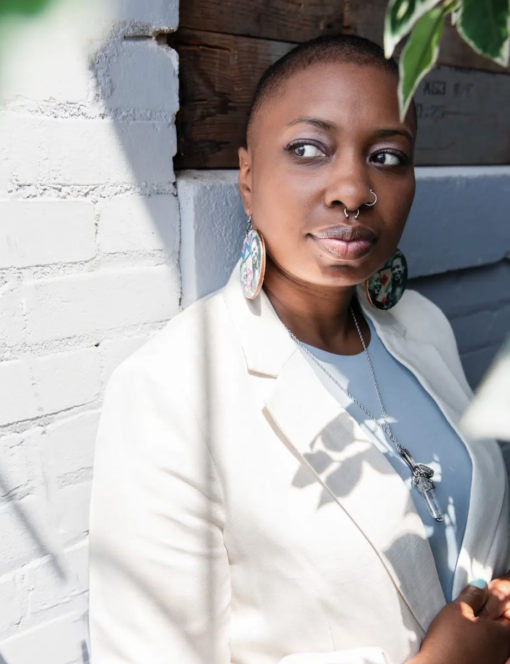
Dominique Hill Storied by elders as “dancing before she could walk,” Dr. Dominique C. Hill is a lover, poet, vulnerability guide, and interdisciplinary scholar. Zo’s written and performed scholarship traces the living edges of Black girlhood and Blackqueer intimacies. Hill’s artistic practice, research, writing, and communal engagement destabilizes domination, investigates material and normalized borders, as well as engenders deeper intimacy and embodied living. Zo was a 2025 Millay Arts fellow, a 2024-2025 artist in residence at Stone Quarry Hill Art Park , and a 2024 recipient of New York State Council on the Arts (NYSCA) Support for Artists grant. Hill is the author of four books, including the recent Black Gurl Reliable (Vanderbilt 2025). Through research, pedagogy, and praxis, Hill extends the field of Black Girlhood Studies as an Assistant professor of Women’s Gender and Sexuality Studies at Colgate University. Visit https://www.dominiquechill.co/ for more informatio
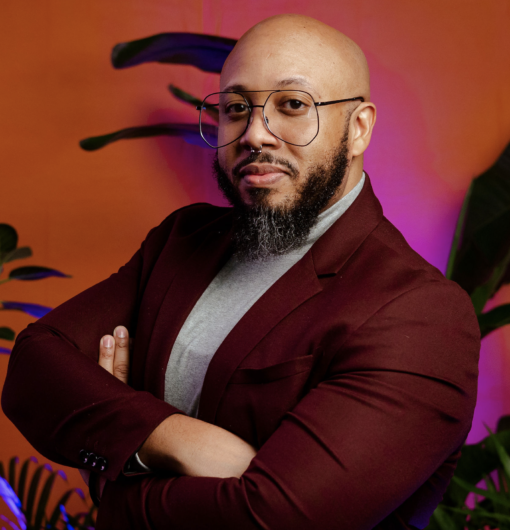
Durell Callier is an artist-scholar, who employs Black feminist and queer methodologies to explore the interconnectivity of race, gender, sexuality, and culture. His research explores how Black art and creative practices respond to and reimagine anti-Black and anti-queer violence. He is co-author of two books, Who look at me?!: Shifting the Gaze of Education Through Blackness, Queerness, and the Body (Brill, 2019), and Performative Intergenerational Dialogues of a Black Quartet: Qualitative Inquiries on Race, Gender, Sexualities, and Culture (Routledge, 2022). Callier is an Associate Professor in the Department of Africana Studies at the University of Delaware.
Our second keynote will be delivered by Brazilian scholars Marcelo Diversi, Washington State University Vancouver and Claudio Moreira, University of Massachusetts Amherst, Marcelo and Claudio have forged a formidable writing/research collaboration going back several decades. Their 2018 book “Betweener autoethnographies: A path toward social justice” won the National Communication Association, Division of Ethnography, 2019 Best Book Award
Betweener Autoethnography: Border Smuggling as Knowledge, Resistance, and Radical Inclusion.
What happens when scholars inhabit the borders of languages, race, ethnicity, social classes, cultures, and histories? In this keynote, we invite you to reflect with us on our collaborative autoethnographic work as we explore the generative possibilities of what we call betweener bodies—living, moving bodies shaped by journeys across national, social, cultural, and epistemological boundaries.
From these spaces of in-betweenness emerge what we describe as border smugglers: individuals who carry memories, stories, and ways of knowing across the borders that attempt to divide and contain us.
Through memory, reflection, and storytelling, betweener autoethnography reimagines how knowledge is produced, shared, and lived. In this sense, autoethnography becomes more than a research method; it becomes a way of knowing, living, and resisting.
Our work seeks to create representational “double mirrors” that reflect encounters with injustice while illuminating paths toward dignity, solidarity, and hope. In these mirrors we see both the wounds produced by systems of exclusion and the fragile possibilities for connection that remain.
At its heart, betweener autoethnography asks a simple but urgent question: How might our histories and stories help us find each other’s humanity—and expand the circle of us?
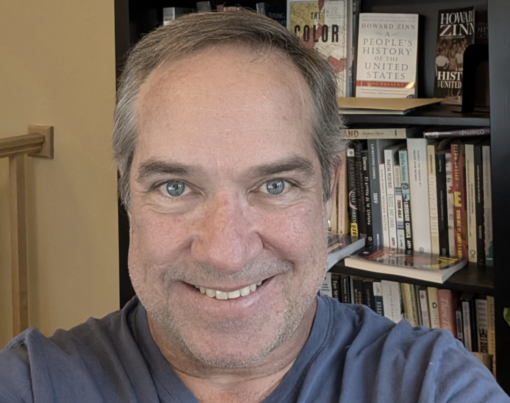
Marcelo Diversi My scholarship has focused on examining and deconstructing narratives of Us versus Them that have historically been used to exclude and dominate the Other. I have attempted to trouble the ideologies behind much of knowledge production about the Other, while interrogating dominant narratives of “deviance” and “free will.” I have tried to do so by advancing ethnographic narratives that highlight the encounter between researcher and collaborators (as opposed to the traditional detached observation and description of the Other from “everywhere”), and narratives that invite the reader to see themselves, even if ever fleetingly, in Other people’s lives. The central goal of my scholarship is to expose the social structures and mechanisms that officially justify exclusionary ideologies, policies, and practices, while also sharing ideas on how to move toward a more inclusive and kinder world for more beings.
Claudio Moreira From the intersection of race, gender, and class, to name a few, I write Performance Autoethnographies looking at words, knowledge, concepts, and actions, which expose differences and also shape, marked bodies into the world. My work can be found at International Review of Qualitative Research, Qualitative Inquiry, Text and Performance Quarterly, International Journal of Qualitative Studies in Education, and Cultural Studies, Critical Methodologies. My two books, co-authored with Marcelo Diversi, are Betweener Talk: Decolonizing Knowledge Production, Pedagogy, and Praxis (Left Coast Press, 2009) and Betweener Autoethnographies: A Path towards Social Justice (Routledge, 2018).

Panel Sessions: Poetry, Songs & Lyrical Understandings
Annalise Elliott, University of West London, “Mother”
Lucinda Bolton, Keele University, “Living in Nights: Sleep, Motherhood and the Longing to Be Known”
David Carless, University West Scotland, “The Hut”
Kitrina Douglas, University West London, “So you think you know about sport? Another pause; Now searching for slack water”
Ann Delilkan,, New York City College of Technology, City University of New York, “Scrub a Little Harder?”
Knut Tore Sælør “I’m not stupid” University of Southeastern-Norway
Tim Buescher, Independent Researcher, “AdvanceRetreatSurrender”
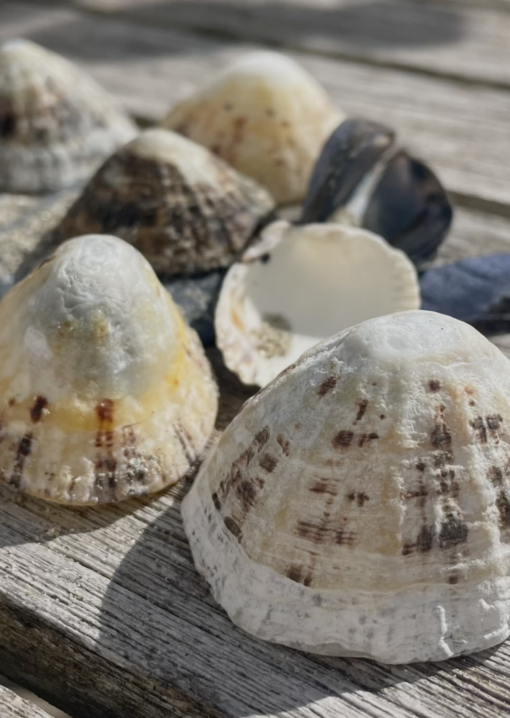

Invited Panel
Meditations on Joy & Wonder
with
Art Bochner, Carolyn Ellis and Kitrina Douglas
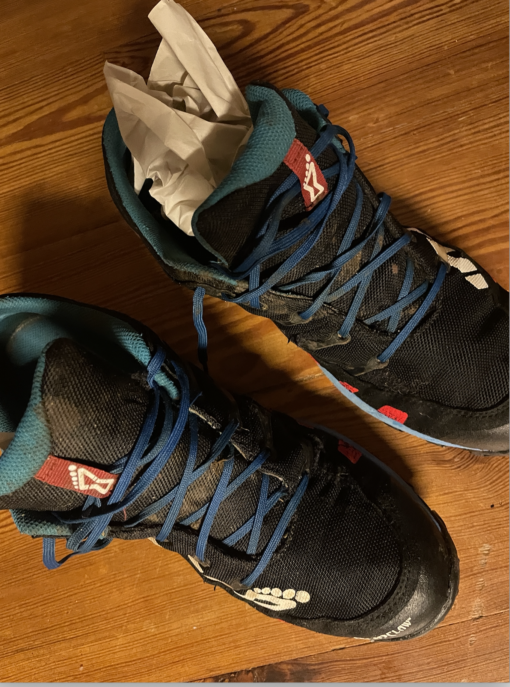
Panel On the move
Join Chloe, Niel and Nadia for a run in the park on Monday, or a walk in Ashton Court on Tuesday morning, rendezvous each day at Clifton Suspension Bridge
Hosting Difference Round Table
Autoethnographic spaces, such as this conference, facilitate sharing personal experience with others. Each person’s experience is undoubtedly rooted in their unique and emergent pathway in the world. Since no pathway is exactly the same as another, autoethnographic experience and, by implication, autoethnographic spaces are characterised by difference.

At the same time, we recognise our own experience in the voices of others. Others’ experiences resonate with our own – we recognise resonant similarities across difference.
But what happens when difference becomes problematic? Does the cultivation of a reflexive autoethnographic sensibility exclude the possibility of problematic difference?
Do we, as Autoethnographers sometimes also need to deal with what happens when our own way-of-being in the world (to which we are seeking to be authentic) meets with another way-of-being in the world – even within an autoethnographic community – which we find problematic, or vice versa? What do we do with such difference? How can such encounters be navigated? Do they just remain difficult, or can fruitful things emerge?
This roundtable session invites discussion around these themes. If you would like to be actively involved in this discussion, for example (a) through attending the session, or (b) contributing to the panel, please contact Jamie Barnes Jamie.Barnes@sussex.ac.uk . You might like to describe why this theme piques your interest or what you would like to bring to the discussion.
Awards
This year we will be making a Lifetime Contribution Award and Dissertation thesis
For future nominations please contact trude.goril.klevan@usn.no or Knut.Tore.Salor@usn.no
Venue
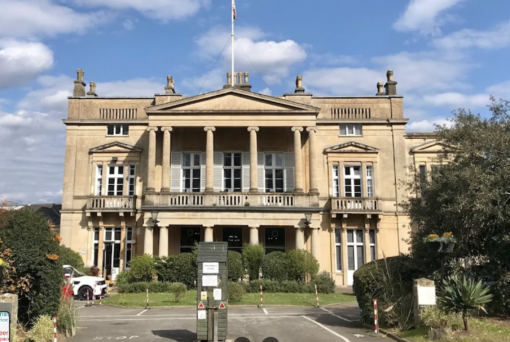
IN-PERSON ATTENDANCE
VENUE: The Engineer’s House, Clifton Village, Bristol
Cost of the in-person registration includes two course hot lunch and unlimited coffees/teas/fruit and biscuits each day.
Delegates can engage in as little or as much of the main programme as suits their interest and needs. There are numerous intimate spaces to share conversations, food or just to rest, along with areas for larger groups and collegiate dining.
Select this link to register https://boomerang-project.org.uk/registration/
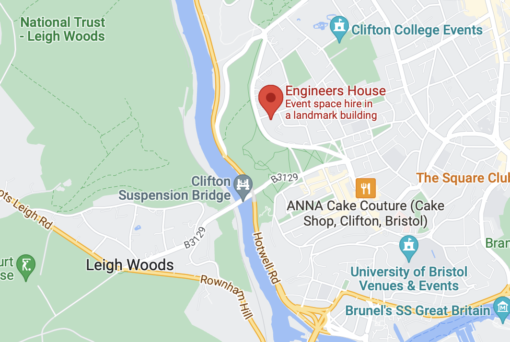
Clifton Village is an area of the city bursting with contemporary independent cafes, bars, restaurants, and boutiques as well as typical cosy English pubs.
The venue is also situated adjacent to Clifton Gorge and the Bristol Suspension Bridge. It backs onto the Bristol Downs park, and a short stroll over the suspension bridge takes you into Ashton Park and Leigh Woods.
Looking for inspiration?
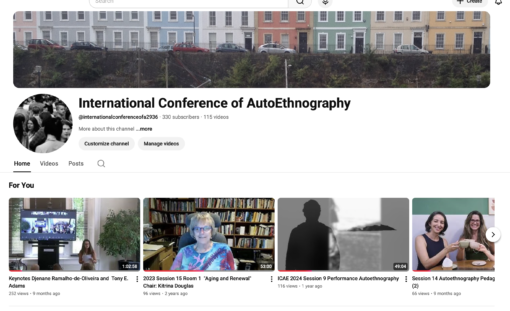
We invite you to subscribe to our youtube channel, with access the hundreds of presentations in the conference archive. Here it is possible to gain a feel for the diverse types of presentation, performances and contributions, that give the conference a particular feel.
These are available via our YouTube conference page https://www.youtube.com/channel/UCWNYTUbli3wRLda7ZmbpqOQ/videos
The archive includes keynote presentations from Carolyn Ellis, Art Bochner, Tony Adams, David Carless, Bryant Keith Alexander, Gayle Letherby, Djenane Ramalho-de-Oliveira, Christopher Poulos, Stacy Holman Jones & Daniel X. Harris, Ken Gale, Trude Klevan, Sophie Tammas. In addition, the resource holds presentations from scholars across the globe studying a myriad of issues, ethical challenges and dilemmas.
https://www.youtube.com/channel/UCWNYTUbli3wRLda7ZmbpqOQ/videos
How should I present my work at the ICAE conference?
There is (fortunately) not an unequivocal answer to this. We encourage you to present your work in a manner that communicates with the audience, in a form you feel comfortable with. We want this to be an inspiring experience for you and the audience. The ICAE is not an “ordinary research conference” where the aim is to present research findings in a scientific IMRAD structure. Thus, PowerPoint presentations with bullet points might not be the best way to share your work. We encourage you to find other ways of presenting – for example reading, performing, photo or film. Feel free – just remember to stick to the time frame.
https://www.youtube.com/channel/UCWNYTUbli3wRLda7ZmbpqOQ/videos